Art and Culture Art and culture form the vibrant soul of a society, weaving together history, identity, and shared human experience. Through painting, music, literature, and dance, they challenge perspectives, preserve heritage, and foster profound connection, proving themselves indispensable to our collective understanding and progress.
What is Art & Culture?
At its core:
- Art is a diverse range of human activities and the products of those activities that involve creative or imaginative talent to express technical proficiency, beauty, emotional power, or conceptual ideas. It is a primary expression of culture.
- They are inseparable. Art is both a product of its surrounding culture and a force that can challenge and shape that culture in return.
The Symbiotic Relationship: How Art and Culture Influence Each Other
Art as a Mirror of Culture: Art reflects the society that creates it.
- Example: Renaissance art (14th-17th century) mirrored the cultural shift toward humanism, scientific inquiry, and the rediscovery of classical philosophy. Paintings became more realistic, focused on individuals, and celebrated the human form.
- Art as a Preserver of Culture: Art acts as a time capsule.
- Example: Ancient Egyptian hieroglyphics and tomb paintings preserve beliefs about the afterlife. Cave paintings in Lascaux, France, tell us about prehistoric hunting rituals and fauna. Without these artworks, our understanding of these cultures would be vastly limited.
- Art as a Driver of Cultural Change: Art doesn’t just reflect; it can provoke, question, and inspire change.
- Example: Picasso’s Guernica (1937) was a powerful protest against the horrors of war, shaping global public opinion against fascism. The novels of Charles Dickens exposed the grim realities of Victorian industrial England and fueled social reform movements.
- Cultural Context Defines Art: The meaning of art is often deeply tied to its cultural context.
- Example: A Native American totem pole has specific spiritual and genealogical significance within its culture that an outside observer might not fully grasp without understanding its context. Similarly, Japanese Noh theatre is deeply influenced by Zen Buddhist principles.
Why is it Important to Study Art and Culture?
- Fosters Empathy and Understanding: Engaging with art from different cultures allows us to see the world through another’s eyes, breaking down prejudices and building bridges.
- Defines Identity: Both personal and collective. It helps us understand who we are, where we come from, and what we value as a society.
- Encourages Critical Thinking: Art often asks complex questions without easy answers, training us to think deeply and see multiple perspectives.
- Documents History: It provides an emotional and subjective record of history that complements historical texts.
- Drives Economy and Tourism: Museums, theatres, film industries, and cultural festivals are significant economic engines for cities and countries worldwide.
- Enriches Daily Life: It provides beauty, joy, solace, and provocation, making life more meaningful.
Current Trends and Conversations
- Decolonization: Re-evaluating museum collections and art history to challenge Western-centric narratives and acknowledge the legacy of colonialism.
- Representation & Diversity: Ensuring that all voices—across race, gender, sexuality, and ability—are represented and heard in cultural production.
- Digital Transformation: The impact of NFTs, AI-generated art, and virtual museums on the creation, ownership, and experience of art.
- Cultural Appropriation vs. Appreciation: The important debate about the line between being influenced by another culture and exploiting it.
. The Lens of Conflict and Power
- Art is rarely created in a vacuum; it’s often a battleground for ideology, power, and resistance.
Propaganda vs. Protest Art:
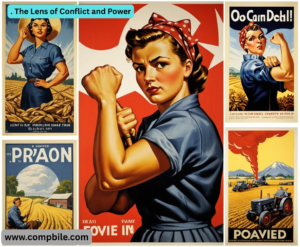
- Propaganda: Art used by states or powers to promote a specific political cause or point of view. It simplifies complex issues and uses emotional appeal to unite people behind a common goal.
- Example: Soviet Socialist Realist paintings glorifying workers and collective farms, or WWII-era American posters like Rosie the Riveter.
- Protest Art: Art that challenges the status quo and authority, giving voice to dissent and mobilizing people for social change.
- Example: The graffiti and posters of the Arab Spring, Banksy’s satirical street art, or protest songs from the Civil Rights and anti-Vietnam War movements.
Censorship and the “Culture War”:
- Throughout history, art has been censored by those in power who find it threatening, blasphemous, or morally corrupt. This continues today, with debates over:
- Public Funding: What art deserves government support? (e.g., the 1990s controversy over Robert Mapplethorpe’s photographs).
- Monuments: Who do we memorialize in public spaces? The removal of Confederate statues in the US is a direct example of culture re-evaluating its own symbols.
- Cancel Culture: The modern phenomenon where art (and artists) are “canceled” or boycotted due to objectionable content or the artist’s actions.
The Lens of Globalization and Fusion
- We no longer live in isolated cultural bubbles. The global exchange of ideas is accelerating, leading to fascinating new hybrid art forms.
- Cultural Fusion (Syncretism): This is the blending of elements from different cultures to create something new.
- Example: K-Pop is a perfect case study. It combines:
- Western influences: Hip-hop beats, R&B vocals, electronic music, and American-style music video production.
- Korean influences: Pop melodies, intricate and synchronized “precision dancing,” and a specific idol culture and industry structure.
- Other Examples: “Tex-Mex” cuisine, Japanese anime’s influence on Western animation, or the integration of African rhythms into modern pop music.
The Lens of the “Art World” Ecosystem
- “Art” doesn’t just appear in a museum. It’s part of a complex ecosystem with many players:
- The Creators: Artists, musicians, writers, dancers.
- The Gatekeepers: Curators, critics, gallery owners, museum directors, academy awards jurors.
- The Market: Collectors, auction houses (Sotheby’s, Christie’s), investors.
- The Institutions: Museums, universities, performance halls, publishing houses.
The Audience: You.
- This ecosystem decides what is deemed “valuable,” “important,” or “canonical.” Historically, this power was held by a small, Western, male-dominated group. A major shift in contemporary culture is the push to diversify these gatekeepers to allow for a more inclusive and representative art world.
The Lens of Technology: A New Renaissance
- Technology is arguably the most powerful force reshaping art and culture today.
- New Mediums: Digital art, virtual reality (VR) experiences, video games as narrative art, AI-generated poetry and imagery.
- Who owns a digital file? What is the value of an NFT (Non-Fungible Token) that represents ownership of a digital artwork?
- Democratization and Saturation: While technology allows more people to create and share art, it also leads to an overwhelming flood of content, making it harder for individual artists to stand out and be sustainable.
Let’s Get Concrete: A Mini-Case Study
Hip-Hop: From Local Culture to Global Phenomenon
- Origin as Cultural Expression: Born in the 1970s in the Bronx, NYC, among African American and Latino youth. It was a cultural response to systemic poverty, marginalization, and urban decay.
- Driver of Change: Hip-hop became a powerful voice for political and social commentary (e.g., Public Enemy, Kendrick Lamar), influencing global conversations about race and inequality.
- French rappers, Japanese beatmakers, and Korean crews all infused it with their own local languages, musical traditions, and cultural concerns.
- Commercialization and Power: It became a dominant global commercial force, creating billion-dollar industries in music, fashion, and media. This success brings constant tension between its roots as a counter-culture and its status as mainstream culture.