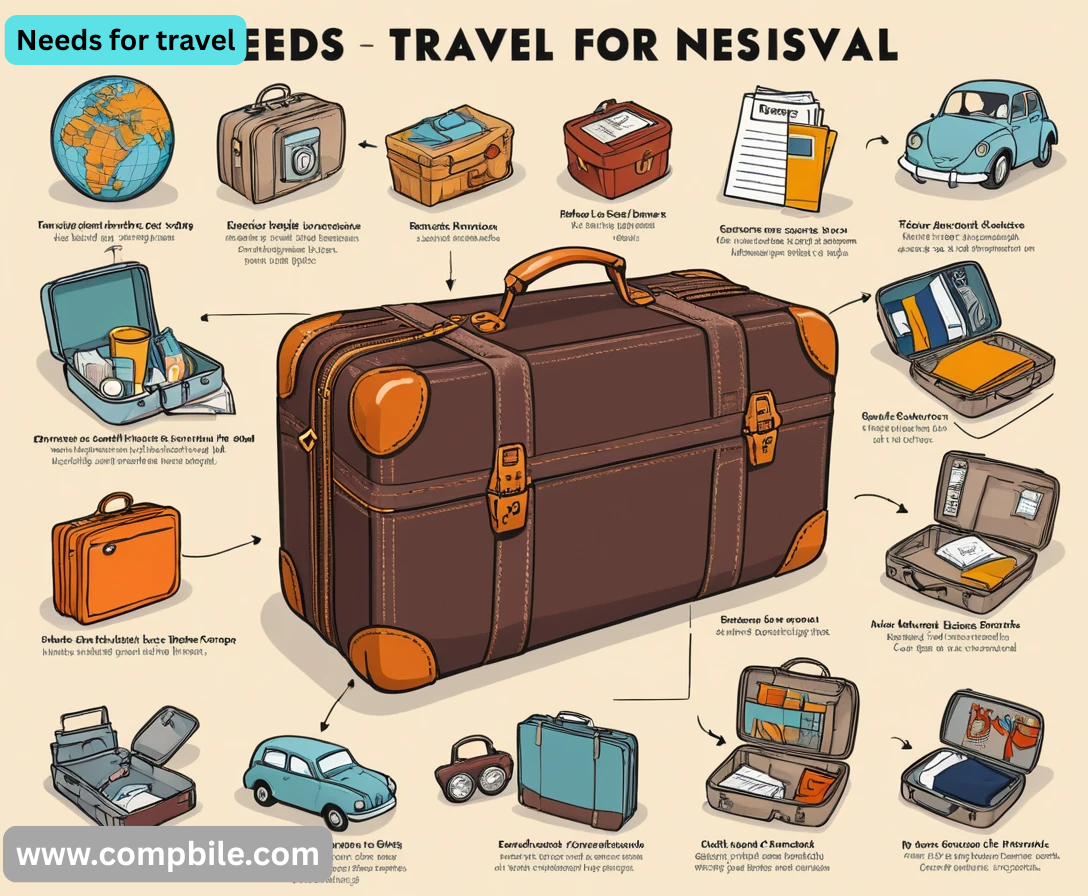
Needs for travel Of course! The “needs for travel” can be broken down into essential categories to ensure a smooth, safe, and enjoyable trip. Here’s a comprehensive list, from the absolute basics to more nuanced needs.
Core Essentials (The Absolute Must-Haves)
These are the things you literally cannot travel without.
- Identification: The most critical item.
- Passport: Required for international travel. Check its expiration date (many countries require 6 months validity beyond your trip).
- Driver’s License: For domestic travel or renting a car.
- Visas: Required for entry into many countries, arranged in advance.
- Travel Insurance Documents: Both digital and physical copies.
Money & Payment Methods:
- Credit/Debit Cards: Notify your bank of your travel plans to avoid fraud alerts.
- Local Currency: It’s wise to have a small amount of cash upon arrival for taxis, tips, or small vendors.
- Emergency Cash: Stored separately from your wallet.
Transportation & Lodging Proof:
- Flight, Train, or Bus Tickets (digital or printed).
- Hotel/Airbnb Reservation Confirmations.
Health & Safety:
- Prescription Medications: In their original containers, with copies of prescriptions.
- Basic First-Aid Kit: Band-aids, antiseptic wipes, pain relievers, motion sickness pills.
Practical & logistical Needs
These are the plans and items that make your trip functional.
- A Plan (Itinerary): Even a loose one. Know your first stop from the airport, your first night’s accommodation, and key sights you want to see.
- Accommodation: Booked in advance, especially during peak season.
- Local Transportation Plan: Research how you’ll get around (metro card, ride-sharing apps, rental car).
Communication:
- Phone with International Plan/SIM Card/eSIM: To use maps, translate, and stay connected.
- Portable Power Bank: A dead phone can strand you.
Information:
- Maps Downloaded Offline (Google Maps, Maps.me).
- Translation App (Google Translate).
- Research: Basic knowledge of local customs, dress codes, and common phrases.
Packing Needs (What to Bring)
- Luggage: A reliable suitcase or backpack that meets airline size requirements.
- Clothing: Appropriate for the climate and culture. Think in layers.
- The “Comfy” Outfit: For long travel days.
- Footwear: Comfortable walking shoes are non-negotiable.
- Toiletries: Travel-sized containers to comply with security regulations. Don’t forget sunscreen and lip balm.
- Tech Gear: Chargers, adapters/converters for international outlets, headphones, camera.
Health & Wellness Needs
- Vaccinations: Check if any are required or recommended for your destination.
- Travel Insurance: This is highly recommended. It covers medical emergencies, trip cancellations, lost luggage, and more. Don’t leave home without it.
- Hand Sanitizer & Disinfecting Wipes: For planes, trains, and buses.
- Awareness of Local Healthcare: Know how to contact emergency services (e.g., 112 in EU, 911 in US/CA, 999 in UK).
Personal & Emotional Needs
Travel isn’t just about logistics; it’s an experience.
- An Open Mind: Be prepared for things to be different and embrace it.
- Patience: Flights get delayed, reservations get lost, things go wrong. Flexibility is key.
- Curiosity: A desire to learn, explore, and try new things (food, activities, conversations).
- A Sense of Adventure: The willingness to step outside your comfort zone.
Pre-Departure Home Needs
- Don’t forget to prepare your life back home.
- Arrange Pet Care / Plant Watering.
- Hold Mail or have it collected by a neighbor.
- Set up an “Out of Office” email reply.
- Inform a trusted friend or family member of your itinerary and how to reach you.
- Secure your home (lock windows, set alarms, put lights on a timer).
Quick Checklist for Different Trip Types:
- Beach Vacation: Swimwear, sunscreen, hat, beach towel, book, sandals.
- City Break: Comfortable walking shoes, day bag, city map/app, power bank.
- Adventure/Hiking: Proper footwear (broken in!), technical clothing, backpack, water purification, navigation tools.
- Business Trip: Business cards, professional attire, presentation materials, laptop charger.
Digital & Data Needs (The Modern Essentials)
In today’s world, these are nearly as critical as your passport.
Data Security:
- VPN (Virtual Private Network): Essential for securing your data on public Wi-Fi (hotels, cafes). Also allows access to geo-restricted content.
- Cloud Backups: Back up your photos and documents regularly to Google Drive, iCloud, or Dropbox.
Digital Tools:
- Travel Apps: Airbnb, Booking.com, Skyscanner, Google Flights, TripIt (to organize confirmations), Uber/Lyft/Grab.
- Offline Entertainment: Download movies, music, podcasts, and books for flights or areas with poor connectivity.
Power Management:
- Universal Travel Adapter: A single adapter that works in multiple countries.
- Multi-Port USB Charger: To charge multiple devices at once from one outlet.
Safety & Security Needs
- Proactive measures to protect yourself and your belongings.
Theft Deterrence:
- Anti-Theft Bag: Bags with slash-proof straps, locking zippers, and RFID-blocking pockets.
- Money Belt or Hidden Pouch: For storing passports and large amounts of cash discreetly under clothing.
Preparedness:
- Copies of Important Documents: Have digital and physical copies of your passport, ID, insurance, and visas stored separately from the originals. Email a copy to yourself.
- Emergency Plan: Know the address and phone number of your country’s embassy or consulate. Share your live location with a trusted contact via your phone.
Health Security:
- Digital Health Passport: Some countries may require proof of vaccination digitally.
- Water Purification: For adventures off the beaten path, consider purification tablets or a LifeStraw.
Cultural & Connectivity Needs
- These needs transform a tourist into a traveler.
Cultural Intelligence:
- Basic Language Skills: Learning phrases like “Hello,” “Thank you,” “Please,” and “How much?” shows respect and goes a long way.
- Understanding Etiquette: Research tipping culture, appropriate dress for religious sites, and general social norms (e.g., haggling is expected in some markets, rude in others).

Meaningful Connection:
- A Journal: To document experiences, feelings, and details photos can’t capture.
- Intentional Disconnect: The need to sometimes put the phone/camera away and be fully present in the moment.
Comfort & Convenience Needs (The Game Changers)
- These items aren’t essential for survival, but they drastically improve the quality of your journey.
For the Journey:
- Neck Pillow, Eye Mask, Earplugs/Noise-Canceling Headphones: The holy trinity for surviving long-haul flights or bus rides.
- Reusable Empty Water Bottle: Fill it up after security at the airport to save money and stay hydrated.
- Snacks: Always have a granola bar or similar on hand for when hunger strikes unexpectedly.
For the Destination:
- Quick-Dry Towel: Lightweight and essential for hostels, beaches, or spontaneous swims.
- Multi-Tool: A small, TSA-compliant one (without a knife) can be endlessly useful.
- Duct Tape: Wrap some around an old gift card for repairs on the go.
The Pre-Trip “Mental Packing” Needs
The most successful travelers prepare their mindset as carefully as their suitcase.
- Define Your “Why”: Are you traveling to relax, to adventure, to learn, to escape, or to connect? Your purpose will guide your choices.
- Manage Expectations: Understand that not every moment will be Instagram-perfect. Embrace the mishaps; they often make the best stories later.
- Embrace Spontaneity: Leave room in your itinerary for unexpected discoveries—the hidden café, the local festival, the recommendation from a stranger.
Post-Trip Needs
The needs don’t end when you return home.
- Financial: Submit any insurance claims. Pay off credit card bills from your trip.
- Reflection: Go through your photos and journal entries while they’re still fresh. What did you learn? What was your favorite moment?
- Re-entry: Give yourself a buffer day to adjust before jumping back into work. Do laundry, grocery shop, and process the experience.