
A Short History Of Money Money is not just coins and paper. It is fundamentally an idea—a system of value that allows society to exchange goods and services efficiently. Its evolution is the story of human civilization, trade, and technology.
The Age of Barter: The Double Coincidence of Wants
- Before money, there was barter—the direct exchange of one good for another. If you had a goat and wanted pottery, you had to find a potter who wanted a goat. This “double coincidence of wants” was highly inefficient and limited the scale of trade.
Commodity Money: Value You Can Use
- A Short History Of Money To solve the barter problem, societies began using commodity money: items that had value in themselves but were also widely accepted as a medium of exchange. The key was that these commodities were durable, portable, and recognizable.
- Examples: Grain, cattle, shells (like Native American wampum), salt (from which the word “salary” is derived), and even large stones on the island of Yap (Rai stones).
- Advantage: The value was intrinsic; the item itself was useful.
- Disadvantage: Not always easy to divide or transport (you can’t cut a cow in half to make change).
The First Coins: Standardization and Authority (c. 600 BCE)
- The next leap occurred in ancient Lydia (modern-day Turkey) with the creation of standardized coins made from electrum, a natural alloy of gold and silver.
- Why it was revolutionary: Coins were a guaranteed weight and purity, often stamped with the mark of a king or government to back their value. This made trade faster and built trust across wider networks.
- Impact: Coins spread through the Greek and Persian empires, facilitating trade and paying soldiers, becoming the backbone of ancient economies.
Paper Money: The Promise to Pay (c. 7th Century CE – 17th Century)
- The next big innovation was representative money. Instead of carrying heavy coins, people could deposit their gold with a trusted party (like a goldsmith or bank) and receive a paper receipt. These receipts, which were promises to pay the bearer in gold on demand, began to circulate as money themselves.
- China: The first known paper money appeared in Tang Dynasty China.
- Europe: Banks began issuing banknotes in the 17th century. This was the birth of the gold standard, where paper currency was directly convertible into a precious metal.
The Gold Standard and Fiat Money: Trust in Government (20th Century)
- For centuries, most currencies were tied to gold. However, the 20th century saw a critical shift.
- The Gold Standard: A country’s currency had a value directly linked to a specific amount of gold. This created stability in international exchange rates.
- Fiat Money: After World War II and especially after 1971 (when the US ended the dollar’s convertibility to gold), the world moved to fiat money.
- What is it? Fiat currency (like the US Dollar, Euro, or Yen) has no intrinsic value and is not backed by a physical commodity.
- Where does its value come from? Solely from government decree (fiat is Latin for “let it be done”) and, most importantly, the collective trust and faith that people have in the government that issues it. Its value is based on supply and demand.
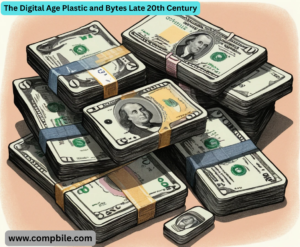
The Digital Age Plastic and Bytes Late 20th Century
Money became increasingly abstract.
- Credit and Debit Cards: In the 1950s and beyond, cards shifted money from physical cash to digital entries in bank ledgers.
- Online Banking: The internet allowed for the instantaneous electronic transfer of money, making physical location almost irrelevant for finance.
The Future: Cryptocurrencies and Beyond (2009 – Present)
The latest chapter began with the creation of Bitcoin in 2009.
- A Short History Of Money What is it? A decentralized digital currency that operates on a technology called blockchain—a public, secure, and distributed ledger.
- The Revolution: Cryptocurrencies challenge the concept of state-controlled fiat money. They are not issued by any central authority, and their value is determined by the market and the network of users.
- The Debate: Are they a speculative asset, a true medium of exchange, or the next evolution of money? The story is still being written.
The Limitations of Barter: More Than Just Inconvenience
- The problem with barter wasn’t just finding someone who wanted your goat. It was about divisibility and deferred payment.
- Divisibility: How do you pay for a loaf of bread with a goat? You can’t give the baker a leg today and the rest later. Commodity money like grain or salt was better because it was divisible, but it could spoil or be inconsistent in quality.
- Debt and Credit: Barter makes it nearly impossible to structure complex loans or long-term contracts. Money provided a stable unit of account for future obligations.
The Chinese Experiment with Paper Money: A Cautionary Tale
- While China under the Tang (7th century) and Song (11th century) Dynasties pioneered paper money, their experience also revealed its greatest danger: hyperinflation.
- The Mongol Yuan Dynasty (13th century), under Kublai Khan, embraced paper money as the primary currency. Marco Polo was astonished, describing it as alchemy.
- However, with no effective controls, the government began printing massive amounts of money to cover spending, especially during wars. This led to a loss of confidence and eventually, runaway inflation, causing the system to collapse. This early example shows that without discipline, fiat money can fail.
The Goldsmiths and the Birth of Fractional-Reserve Banking
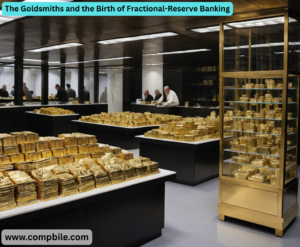
- A Short History Of Money This is a crucial chapter in the story. In 17th century England, people started storing their gold with goldsmiths for safekeeping. The goldsmiths issued paper receipts.
- The Discovery: Goldsmiths realized that not everyone would come to claim their gold at the same time. They could lend out some of the gold (or issue new receipts against it) to earn interest.
- Creating Money from Thin Air: This was the birth of fractional-reserve banking. They only kept a fraction of the total gold deposits in reserve. By lending out more than they physically held, they were effectively creating new money. This amplified economic growth but also introduced the risk of bank runs if too many people demanded their gold at once.
The Advantages:
- Price Stability: It prevented governments from printing money recklessly, curbing inflation.
- International Confidence: It fixed exchange rates, reducing uncertainty for international trade.
- The Fatal Flaw: Lack of Flexibility. The money supply was tied to gold reserves, not the needs of the economy. During a recession, when a government might want to stimulate growth by increasing the money supply, the Gold Standard tied its hands, often making downturns worse (e.g., the Great Depression).
- The End: Countries abandoned it during WWI to print money for the war effort. A weakened version post-WWII (the Bretton Woods system) finally collapsed in 1971 when President Nixon suspended the dollar’s convertibility to gold, leading to the global fiat system we have today.
The Double-Edged Sword of Fiat Money
Fiat money gives governments and central banks powerful tools, but also great responsibility.
- The Power: Central banks can now control the money supply to manage the economy —lowering interest rates and increasing money flow during a recession (quantitative easing), or doing the opposite to combat inflation.
- The Peril: The main risk is inflation. Since the money isn’t backed by a physical commodity, nothing stops a government from printing excessive amounts to pay its debts, which can destroy the currency’s value (e.g., Weimar Germany, Zimbabwe, modern Venezuela).
Cryptocurrencies: The Trust Machine
Cryptocurrencies like Bitcoin propose a radical alternative to the current system.
- A Short History Of Money The Problem they Solve: Instead of trusting a central bank (like the Federal Reserve) or a commercial bank to verify a transaction, cryptocurrencies use decentralized consensus on a blockchain.
- Blockchain as a Public Ledger: Imagine a Google Sheet of every transaction ever made, duplicated on thousands of computers worldwide. To add a new transaction (a “block”), the network must agree it’s valid (“chain”). This makes it extremely secure and transparent.
- The Core Innovation: It replaces trust in a central institution with trust in code, cryptography, and a distributed network. This is why it’s called “trustless”—you don’t need to trust a third party, just the mathematical rules of the system.
The Evolutionary Path of Trust
The entire history of money can be seen as an evolution in what we trust to hold value:
- Trust in the Object: (Commodity Money) – “I trust this salt because I can use it.”
- Trust in the Metal: (Coinage) – “I trust this coin for its weight and purity of gold.”
- Trust in the Institution: (Paper Money, Banks) – “I trust this paper note because a bank promises to give me gold for it.”
- Trust in the Government: (Fiat Money) – “I trust this dollar because the U.S. government stands behind it and everyone else accepts it.”
- Trust in the Network: (Cryptocurrency) – “I trust this Bitcoin because the decentralized mathematical network verifies and secures it.”