
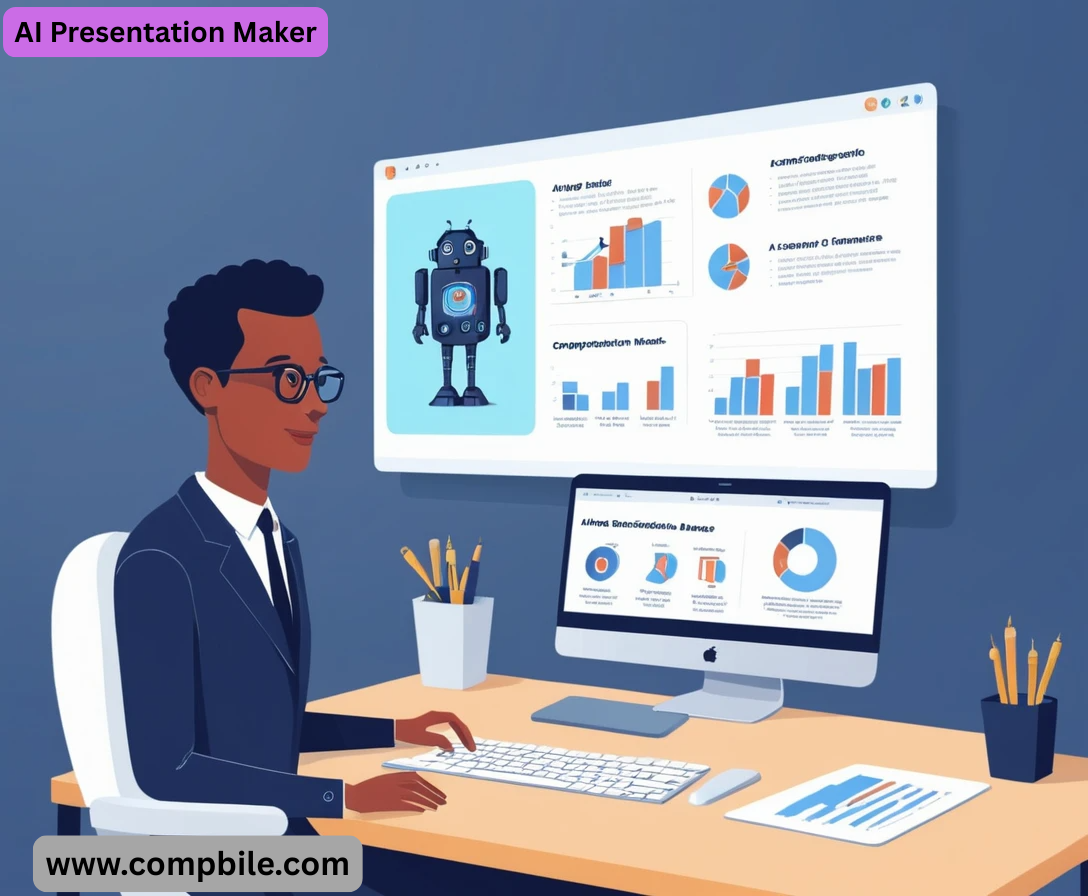
AI Presentation Maker Of course! An AI Presentation Maker is a powerful tool that uses artificial intelligence to automate and enhance the creation of slides. Let’s break down everything you need to know, from what it is to how to choose the best one.
What is an AI Presentation Maker?
It’s a software application that uses AI (like Large Language Models and design algorithms) to generate entire presentations or slides from a simple text prompt. Instead of starting from a blank slate, you describe your topic, and the AI creates the content, design, and layout for you.
Key Features and Capabilities
- Text-to-Presentation: The core feature. You type “Create a 10-slide presentation on the benefits of renewable energy for a high school class,” and it generates the outline, text, and visuals.
- AI Content Generation & Writing Assistance: It can draft bullet points, speaker notes, and even refine your existing text to be more concise and impactful.
- Automated Design and Layouting: The AI applies color schemes, fonts, and layouts that are visually appealing and consistent, eliminating the need for design skills.
- Smart Template Suggestions: Based on your topic (e.g., “Business Plan,” “Product Launch,” “Academic Report”), it suggests the most appropriate templates.
- AI Image Generation: Some tools can create custom images, icons, and graphics directly within the platform based on your slide content.
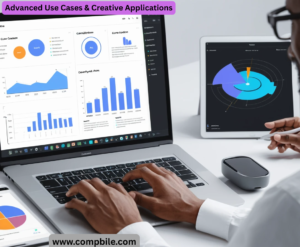
- Data Visualization: You can provide data, and the AI will suggest the best charts (bar, pie, line) to represent it visually.
- Integration: Many integrate with popular tools like Google Workspace, Microsoft 365, and project management software.
How to Use an AI Presentation Maker (Step-by-Step)
The process is typically very straightforward:
- Start with a Prompt: Enter a detailed description of what you need.
- Good Prompt: “Create a 12-slide investor pitch deck for a new eco-friendly coffee shop, including a problem slide, solution, market size, business model, financial projections, and team.”
Bad Prompt: “Make a presentation about coffee.”
- Generate the First Draft: The AI will create a complete presentation in seconds, with a title slide, outline, content slides, and a conclusion.
Edit and Refine:
- Content: Use the AI’s editing tools to rewrite text, change the tone, or shorten content.
- Design: Apply a different template or use one-click styling to change the entire look.
- Media: Add or generate new images, icons, and charts.
- Add Final Touches: Review the flow, add speaker notes, and practice your delivery. The AI can often help generate these notes as well.
- Export and Share: Export as a PDF, PowerPoint file (.pptx), or share a live link for interactive presentations.
Benefits and Limitations
Benefits:
- Massive Time Savings: Cuts down creation time from hours to minutes.
- Democratizes Design: Allows anyone to create professional-looking slides without graphic design expertise.
- Overcomes “Blank Canvas” Anxiety: Provides a solid starting draft, eliminating writer’s block.
- Ensures Consistency: Automated design maintains a consistent look and feel throughout the deck.
Limitations:
- Generic Content Risk: AI-generated text can sometimes be generic and lack a unique voice or deep expertise. Always review and personalize.
- Limited Creativity: The AI works within its training data, so highly unique or avant-garde designs may be harder to achieve.
- Fact-Checking is Essential: AI can “hallucinate” and produce incorrect information or fake statistics. You are responsible for accuracy.
- Cost: The best tools are often premium subscriptions.
Advanced Use Cases & Creative Applications
AI presentation tools go beyond simple business slides. Here’s how they’re being used creatively:
- Interactive Pitch Decks: Tools like Tome and Gamma allow you to embed live web content directly into your slides—think Figma prototypes, live Twitter feeds, Loom videos, or interactive Airtable bases. This turns a static presentation into an immersive experience for investors or clients.
- Rapid E-Learning Content Creation: Teachers and course creators can generate entire lesson modules from a syllabus. For example, a prompt like “Create a 5-part micro-course on Python basics for beginners, with quizzes and code examples” can produce a structured, ready-to-use educational deck.
- Dynamic Reporting: Instead of manually updating charts every month, you can connect some AI tools to data sources (like Google Sheets) to create “living” reports. The AI can help design the layout and even write summaries of the data trends.
- Personalized Sales Proposals: Sales teams can use AI to generate the core structure of a proposal and then use variables to automatically personalize it for each client, including their company name, industry-specific case studies, and relevant data points.
- Storyboarding and Creative Brainstorming: Writers and filmmakers can use the narrative capabilities of tools like Tome to visually storyboard a script or pitch a creative concept, using AI-generated images to visualize scenes.
The Anatomy of a Perfect AI Presentation Prompt:
- Role & Audience: “Act as a senior marketing strategist creating a presentation for C-level executives…”
- Topic & Goal: “…about launching our new sustainable activewear line. The goal is to secure a $500,000 marketing budget.”
- Scope & Length: “Create a 15-slide presentation that includes…”
- Key Sections/Outline: “…the following sections: Market Opportunity, Competitive Landscape, Our Unique Value Proposition, Marketing Funnel Strategy, Channel Breakdown (Social, PR, Influencer), Budget Allocation, and Expected ROI.”
- Tone & Style: “The tone should be data-driven, confident, and innovative.”
- Visual Guidance: “Use a modern, clean design with a color palette of forest green and white. Include suggestions for relevant, high-impact photography.”
Example of a Powerful Prompt:
Create a 10-slide project kickoff presentation for the development team and stakeholders for a new mobile app called ‘FlowSpace,’ a mindfulness and productivity app. The presentation should cover the project vision, key features (meditation timer, focus sessions, analytics), timeline with milestones, team roles, and success metrics. Use a calm, professional tone and a design that feels serene and tech-forward.”
The Future of AI Presentation Makers
The technology is evolving rapidly. Here’s what’s on the horizon:
- Multi-Modal and Video Generation: The next step is generating not just static slides but entire video presentations. Imagine typing a prompt and receiving a video with a synthetic avatar delivering the presentation, with dynamically generated visuals and a voiceover.
- Deep Personalization at Scale: AI will be able to analyze the LinkedIn profiles of everyone in the room and automatically tailor the examples and data points in your presentation to resonate with their specific backgrounds and interests.
- Real-Time Collaboration with AI: The AI will act as an active team member during the creation process, not just a first-draft tool. It could suggest “This slide is too text-heavy, would you like me to summarize it into three bullet points?” or “The data on slide 7 contradicts your point on slide 3.”
- Integrated Rehearsal and Coaching: AI will analyze your presentation and then listen to you rehearse, providing feedback on your pacing, use of filler words, tone of voice, and even your body language via your webcam.
- Seamless Cross-Platform Synthesis: The AI will be able to pull raw data from your CRM, create a summary in a Google Doc, and then transform that doc into a fully designed presentation deck and a corresponding one-page executive summary PDF, all from a single command.