
Bakuchiol Eye Cream Of course! Here is a comprehensive guide to Bakuchiol Eye Cream, covering what it is, its benefits, how to use it, and what to look for when buying one.
What is Bakuchiol?
- Bakuchiol (pronounced buh-KOO-chee-ol) is a plant-derived compound extracted primarily from the seeds of the Babchi plant (Psoralea corylifolia), which has been used in Ayurvedic and Chinese medicine for centuries.
- Its primary claim to fame is that it is a natural, plant-based alternative to retinol. Clinical studies have shown that it delivers similar benefits—like reducing wrinkles and improving skin elasticity—but without many of the harsh side effects commonly associated with retinol, such as redness, irritation, peeling, and photosensitivity.
Benefits of Bakuchiol in an Eye Cream
- The skin around the eyes is the thinnest and most delicate on the body, making it prone to showing the first signs of aging. An eye cream formulated with Bakuchiol is specifically designed to target this sensitive area.
- Reduces Fine Lines and Wrinkles: Like retinol, Bakuchiol encourages skin cell turnover and boosts collagen production. This helps to smooth out crow’s feet and other fine lines around the eyes.
- Improves Skin Firmness and Elasticity: By stimulating collagen and elastin, it helps to tighten and firm the delicate eye area, reducing the appearance of sagging.
- Brightens Dark Circles: Bakuchiol has antioxidant and anti-inflammatory properties that can help reduce pigmentation and improve circulation, which can lessen the appearance of bluish or brownish dark circles.
- Soothes and Calms: Unlike retinol, which can be very irritating, Bakuchiol is generally well-tolerated and can even have a calming effect on the skin, making it ideal for the sensitive eye area.
- Minimizes Irritation: This is its biggest advantage for the eye area. You can get “retinol-like” results without the risk of dry, flaky, or red skin.
- Safe for Daytime Use: Since Bakuchiol does not cause photosensitivity, it can be used in your morning routine, unlike traditional retinol which is strictly for nighttime.
Who Should Use a Bakuchiol Eye Cream?
- Anyone with sensitive eyes who cannot tolerate retinol.
- Those looking for a natural alternative to synthetic retinoids.
- People in their late 20s and beyond who are starting to see early signs of aging (fine lines, loss of firmness).
- Anyone wanting to address dark circles and puffiness with an active ingredient.
How to Use Bakuchiol Eye Cream
- Cleanse: Start with a clean, dry face.
- Tone & Serum: Apply your toner and facial serum as usual.
- Apply Eye Cream:
- Take a pea-sized amount for both eyes.
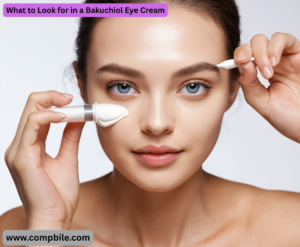
- Dot the cream gently along the orbital bone (the bone that surrounds your eye socket), under the eye, and on the outer corners.
- Using your ring finger (it applies the least pressure), gently pat and tap the product into the skin until absorbed. Avoid rubbing or pulling.
- Moisturize & Protect: Follow with your face moisturizer and, in the morning, always finish with a broad-spectrum sunscreen. While Bakuchiol isn’t photosensitizing, sun protection is crucial for preventing further aging and protecting your results.
- Frequency: You can typically use it both morning and night, but if you have extremely sensitive skin, start with once per day (e.g., in the evening) to see how your skin reacts.
What to Look for in a Bakuchiol Eye Cream
A great Bakuchiol eye cream will be part of a supportive formula. Look for these complementary ingredients:
- Hydrating Ingredients: Hyaluronic Acid, Squalane, Glycerin, Ceramides. These plump the skin and prevent dehydration, making fine lines less noticeable.
- Soothing Ingredients: Niacinamide, Caffeine, Peptides, Bisabolol, Centella Asiatica. These help with dark circles, puffiness, and overall skin barrier health.
- Antioxidants: Vitamin C, Vitamin E, Ferulic Acid. These protect the skin from environmental damage and can enhance the brightening effects.
- Check the Concentration: While brands don’t always disclose the percentage, look for Bakuchiol listed high in the ingredient list, indicating a significant concentration.
The Science Behind Bakuchiol: How It Mimics Retinol
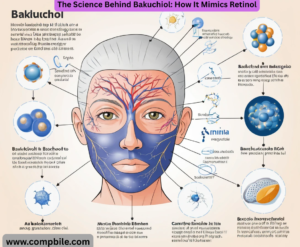
It’s crucial to understand that Bakuchiol is not a retinoid. It doesn’t bind to the same receptors in the skin. Instead, it’s what scientists call a “functional analog” – it influences the same skin pathways and genes to produce remarkably similar end results.
Key Mechanistic Actions:
- Gene Expression Regulation: Studies show that Bakuchiol upregulates genes like CRABP2 and CYP26A1, which are involved in retinoic acid metabolism. This is a core reason for its retinol-like effects.
- Collagen Synthesis: It significantly boosts the production of Collagen I, III, and IV, which are essential for skin structure, firmness, and the support of the under-eye area.
- Antioxidant Power: Bakuchiol is a potent antioxidant, neutralizing free radicals caused by UV exposure and pollution. This helps prevent the breakdown of collagen and elastin.
- Anti-Inflammation: It downregulates inflammatory markers (like NF-κB), which helps calm skin and is why it’s so much less
irritating than retinol.
Potential Drawbacks & Considerations
- The “Natural” Fallacy: While derived from a plant, “natural” doesn’t automatically mean better or non-allergenic. Always patch test.
- Slower Results? Some users anecdotally report that retinol works faster, though clinical studies show comparable results at the 12-week mark.
- Cost: High-quality Bakuchiol extracts can be expensive, making these eye creams sometimes pricier than drugstore retinols.
- Allergic Potential: As with any plant-derived ingredient, there is a small risk of an allergic reaction, especially for those with complex allergies.
- Market Saturation: With its popularity, some brands may use a minuscule amount of Bakuchiol as a marketing buzzword. Check the ingredient list—it should be in the top half.
- Advanced Ingredient Synergies: Building a Powerhouse Routine
A Bakuchiol eye cream works even better when paired with the right other products.
Morning Eye Routine:
Gentle Cleanser
- Vitamin C Serum (for the entire face, including around the eyes): The antioxidant power of Vitamin C combined with Bakuchiol provides superior protection against environmental damage and helps brighten dark circles.
Bakuchiol Eye Cream: Hydrates and firms.
- Moisturizer with SPF 30+ or a separate Sunscreen: Non-negotiable. Protects the delicate eye area from UV-induced aging, preserving your results.
Evening Eye Routine:
- Double Cleanse (to remove sunscreen/makeup)
- Hydrating Toner or Essence
- Bakuchiol Eye Cream: Works overnight to repair and stimulate collagen.
- Peptide Serum or Moisturizer: Peptides are another gentle, anti-aging powerhouse that signals the skin to produce more collagen. They pair beautifully with Bakuchiol.
- Facial Oil or Rich Moisturizer (avoiding the immediate eye area if it’s too heavy).
- What to Avoid Applying at the Same Time:
- No Need to Avoid Much: One of Bakuchiol’s strengths is its compatibility.
- Very Strong Actives: While generally safe, if you have extremely sensitive skin, be cautious about applying very high concentrations of AHA/BHA (acids) or pure Vitamin C serums directly on the eye area where you’ve just applied Bakuchiol. Listen to your skin.