
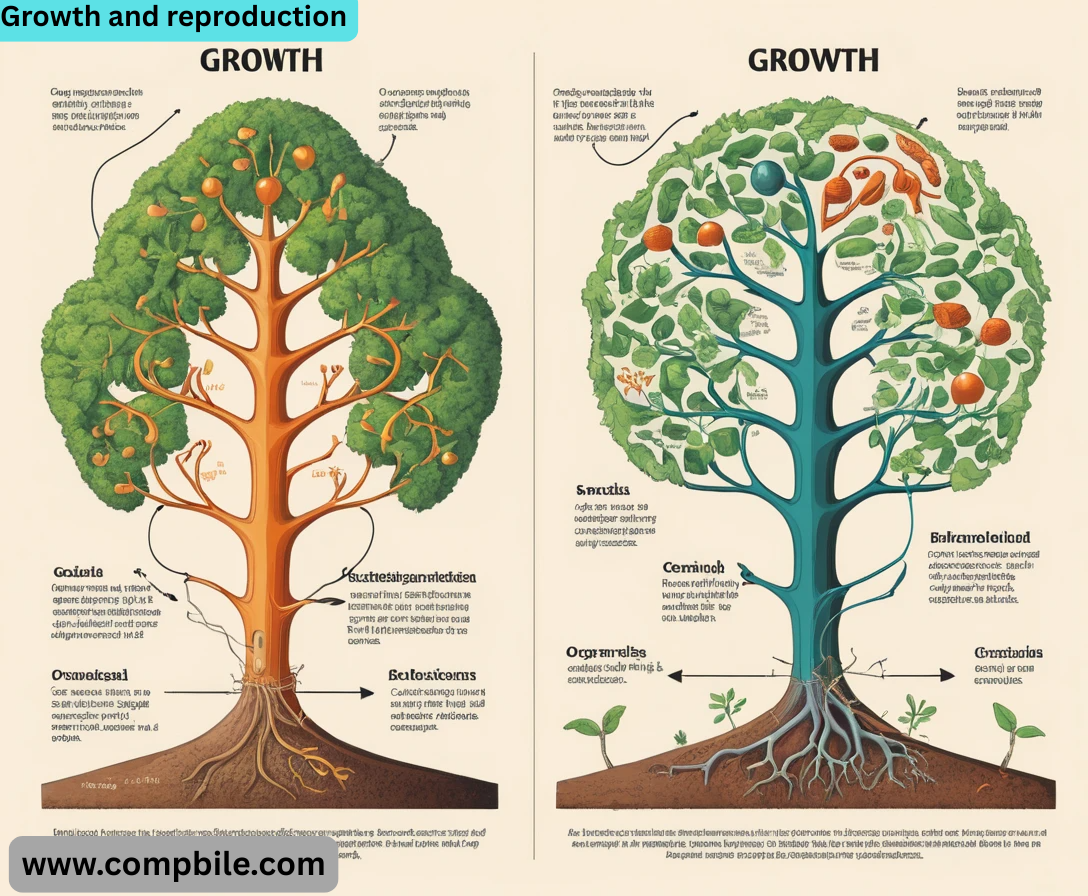
Growth and reproduction Of course. The relationship between growth and reproduction is a fundamental concept in biology, representing a key trade-off in an organism’s life strategy. Here is a detailed breakdown of both processes and how they are interconnected.
Growth
- Growth refers to the irreversible increase in size, mass, and complexity of an organism. It involves the synthesis of new cellular components and structures.
- Process: Primarily achieved through cell division (mitosis) and cell enlargement. Cells specialize through differentiation to form tissues and organs.
Purpose:
- To reach a size and state of development suitable for survival and reproduction.
- To compete effectively for resources (e.g., light for plants, food for animals).
- To avoid predation (e.g., growing too large for certain predators).
Mechanisms:
- In Animals: Growth is often determinate, meaning it stops after a certain age or size is reached (e.g., humans, birds).
- In Plants: Growth is often indeterminate, meaning it can continue throughout the organism’s life from meristematic tissues (tips of roots and shoots).
- In Fungi/Bacteria: Growth is primarily through vegetative expansion and cell division.
Reproduction
- Reproduction is the biological process by which organisms produce new individuals (offspring), ensuring the continuation of their species.
- Process: Can be asexual (involving one parent, producing genetically identical clones) or sexual (involving two parents, producing genetically unique offspring through the fusion of gametes).
- Purpose: The ultimate goal is to pass genetic material to the next generation, enabling species survival and adaptation over time through evolution.
Mechanisms: Vastly different across life forms:
- Animals: Sexual reproduction is common (internal or external fertilization), though asexual reproduction exists (e.g., budding in hydra).
- Plants: Exhibit both sexual (flowers, seeds) and asexual reproduction (runners, tubers, bulbs).
- Fungi/Bacteria: Primarily asexual (budding, binary fission), but many also have complex sexual cycles.
The Crucial Relationship: The Trade-Off
- The most critical aspect of the growth-reproduction relationship is the resource allocation trade-off. An organism has a finite amount of energy and resources (from food, photosynthesis, etc.).
- This trade-off drives the evolution of an organism’s life history strategy—when it is most advantageous to grow versus when it is most advantageous to reproduce.
Going Deeper: The Mechanisms and Strategies
The Molecular Levers: Hormonal Control
- The switch between growth and reproductive phases is often governed by complex hormonal signals.
- In Animals: The transition from juvenile to adult (metamorphosis, puberty) is a classic example.
- Growth Phase: Dominated by hormones like Growth Hormone (GH) and Insulin-like Growth Factors (IGFs), which promote cell division and protein synthesis.
- Reproductive Phase: Triggered by the activation of the hypothalamic-pituitary-gonadal (HPG) axis. Gonadotropin-releasing hormone (GnRH) from the hypothalamus signals the pituitary to release luteinizing hormone (LH) and follicle-stimulating hormone (FSH), which kickstart the maturation of gonads and the production of sex hormones (estrogen, testosterone). These sex hormones can often inhibit further growth, signaling that resources should now be diverted to reproduction.
- In Plants: The balance is controlled by a cocktail of plant hormones.
- Vegetative Growth (Leaves/Stems): Promoted by auxins, gibberellins, and cytokinins.
- Reproductive Phase (Flowering/Fruiting): Triggered by environmental cues (day length, temperature) that lead to the production of florigen. Other hormones like ethylene play a key role in fruit ripening.
The Trade-Off in Action: More Than Just Energy
The trade-off isn’t just about calories; it’s about resources, risk, and time.
- Resources: Nutrients (like nitrogen and phosphorus), water, and internal building blocks (proteins, lipids).
- Risk: Reproducing early at a small size might mean fewer offspring, but it avoids the risk of dying before reproducing at all. This is common in highly predatory or unpredictable environments.
- Time: Some organisms prioritize rapid growth to outcompete others (r-strategists, often semelparous), while others grow slowly and invest heavily in a few, well-cared-for offspring (K-strategists, always iteroparous).
Asexual vs. Sexual Reproduction: A Different Trade-Off
The type of reproduction also creates a trade-off with growth.
Asexual Reproduction (e.g., budding, fission):
- Pro: Fast, efficient, doesn’t require a mate. It’s essentially a form of rapid growth that results in a new, genetically identical individual. The line between growth and reproduction is blurred.
- Con: No genetic variation. This is a risky strategy if the environment changes or a new disease emerges.
Sexual Reproduction:
- Pro: Generates immense genetic variation, enabling adaptation.
- Con: Energetically very costly (finding a mate, producing gametes, courtship rituals). It also carries the “cost of meiosis,” where an organism only passes on 50% of its genes to each offspring. This is a massive diversion of resources away from growth and self-maintenance.
Case Studies to Illustrate the Concept
- Pacific Salmon (Semelparity): They hatch and grow in freshwater, then migrate to the ocean to grow much larger. After several years, they stop feeding and divert every ounce of energy into a single, arduous migration back to their birthplace to spawn (reproduce). Their bodies break down (release cortisol, deteriorate) to fuel this final effort, and they die immediately after, recycling nutrients into the ecosystem.
- Oak Tree (Iteroparity): An acorn germinates and spends years or even decades in a juvenile growth phase, building a deep root system and a strong trunk. Once it reaches sufficient size and stored energy, it begins reproducing annually. It allocates a portion of its yearly photosynthetic energy to producing thousands of acorns, while the rest goes to its own continued growth and survival, allowing it to reproduce for centuries.
Annual vs. Perennial Plants:
- Annual (e.g., Bean plant): Its entire life cycle is “grow, reproduce, die” in one season. Growth is rapid and solely to support one big reproductive event.
- Perennial (e.g., Apple tree): It grows, then allocates energy simultaneously to further growth (new branches, roots) and reproduction (flowers/fruit) every year. In winter, it enters dormancy (suspending growth) to survive.
Conceptual Framework: The Life History Theory
Biologists use Life History Theory to formalize these ideas. It posits that natural selection shapes an organism’s schedule of:
- Growth
- Reproduction
- Survival
Key variables in this schedule are:
- Age at first reproduction
- Number and size of offspring
- Number of reproductive events
- Lifespan
The Evolutionary “Arms Race”: The Cost of Sex
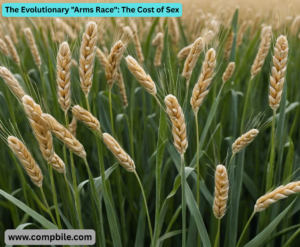
- Sexual reproduction is an evolutionary paradox. It’s costly, risky, and dilutes an individual’s genetic contribution. So why did it evolve and persist? The answer lies in a relentless arms race.
- The Pathogen Hypothesis: Imagine a host population (e.g., a field of wheat) that reproduces asexually. It’s a clone. A single pathogen (a fungus, virus) that evolves to overcome its defenses could wipe out the entire population.
- Sex as a Defense: Sexual reproduction shuffles the genetic deck every generation. This constant generation of new genetic combinations (especially in immune system genes) creates a moving target for pathogens. It’s an evolutionary “arms race” where growth and maintenance of a complex reproductive system (gonads, mating behaviors) is the price paid for long-term species survival via genetic innovation.
The Ontogenetic Niche: Changing Your Role as You Grow
An organism’s ecological function often changes dramatically between its growth and reproductive phases.
- Caterpillar vs. Butterfly: The caterpillar is a growth machine. Its entire existence is about eating and storing energy. The butterfly is a dispersal and reproduction machine. It often doesn’t even have functional mouthparts; its sole purpose is to find a mate and disperse eggs to a new location. This drastic shift reduces internal competition for resources between life stages.
- Pacific Salmon: As juveniles in freshwater, they are prey and process nutrients. As adults in the ocean, they are predators. In their final reproductive phase, they become a massive nutrient pulse, transporting ocean-derived nutrients upstream to fertilize entire riparian ecosystems. Their death is a final, extreme act of resource reallocation on an ecosystem scale.
The Quantum of Offspring: The Smith-Fretwell Model
This elegant model in evolutionary ecology asks: “For a given amount of energy, should a parent make few large offspring or many small ones?”
- The theory predicts an optimal offspring size.
- Larger offspring have a higher chance of survival (they are more competitive, have more energy reserves).
- But there are diminishing returns. An offspring twice the size doesn’t have twice the survival chance.
- Therefore, a parent can often maximize its overall reproductive success by producing more medium-sized offspring rather than a few very large ones.
- This model perfectly encapsulates the trade-off: energy put into making each individual offspring larger (a form of parental investment) is energy that could have been used to make more offspring.
The Ultimate Constraint: The Disposable Soma Theory of Aging
This theory connects the growth-reproduction trade-off directly to aging and death.
- The theory posits that an organism has a finite pool of energy for three things: 1) Growth, 2) Reproduction, and 3) Somatic (bodily) maintenance and repair.
- Natural selection favors allocating energy to reproduction (passing on genes now) over perfect somatic maintenance (which only benefits a future that is evolutionarily irrelevant if you’ve already reproduced).
- Therefore, reproduction comes at a direct cost to long-term bodily maintenance. The cellular damage that accumulates from imperfect repair—oxidative stress, DNA mutations, protein misfolding—is the very essence of aging.
- Experiments support this: organisms induced to reproduce early often have shorter lifespans. Conversely, dietary restriction (which reduces reproductive capacity) often extends lifespan by freeing up energy for maintenance.
Philosophical Conclusion: The Existential Choice
At its core, the relationship between growth and reproduction is a biological manifestation of a fundamental existential choice:
- Invest in the Present Self (Growth): Prioritize your own survival, competitive ability, and future potential. This is a conservative, long-game strategy.
- Invest in the Future Legacy (Reproduction): Prioritize the creation of new entities, guaranteeing genetic continuity but at a cost to the self. This is a risky, innovative strategy.