

Metabolism At its simplest, metabolism is the set of life-sustaining chemical transformations within the cells of living organisms. It’s the process your body uses to convert the food and drink you consume into energy. Think of it as the engine that keeps your body running. It powers everything from conscious movement (like walking) to involuntary processes you never think about, like breathing, circulating blood, growing new cells, and repairing damaged tissues.
The Two Key Components of Metabolism
- Metabolism is often broken down into two interconnected processes:
Catabolism (Destructive Metabolism)
- This is the process of breaking down molecules to release energy.
- Purpose: To provide the fuel and building blocks for anabolism.
- Example: Digesting food. When you eat a carbohydrate, your body catabolizes (breaks down) large molecules like starch into smaller sugars (like glucose). This process releases energy that is stored in a molecule called ATP (Adenosine Triphosphate), the body’s primary energy currency.
Anabolism (Constructive Metabolism)
- This is the process of building up or synthesizing all the compounds needed by the cells.
- Purpose: To build and store. It uses the energy released by catabolism.
- Example: Building muscle mass, healing a wound, growing new cells, or storing energy as fat for later use.
What is Your Metabolic Rate?
- Your metabolic rate is the speed at which your body burns calories. It’s typically measured in calories per unit of time (e.g., calories per day). This rate is composed of several factors:
Basal Metabolic Rate (BMR)
- This is the most significant component, accounting for about 60-75% of the total calories you burn each day.
- Definition: The number of calories your body needs to perform its most basic (basal) life-sustaining functions while at complete rest. This includes breathing, circulating blood, cell production, and protein synthesis.
- Think of it as: The calories you’d burn if you slept all day.
Thermic Effect of Food (TEF)
- This accounts for about 10% of your total calorie expenditure.
- Definition: The energy your body uses to digest, absorb, and process the nutrients from your food. Different macronutrients have different TEFs. Protein, for example, has a much higher thermic effect than fats or carbohydrates.
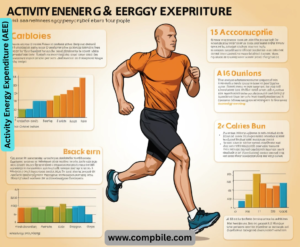
Activity Energy Expenditure (AEE)
- This is the most variable component, accounting for 15-30% (or more for very active people) of your total calorie burn.
- Definition: The calories you burn through all forms of movement.
It is divided into:
- Exercise Activity Thermogenesis (EAT): Planned exercise (going for a run, lifting weights).
- Non-Exercise Activity Thermogenesis (NEAT): All other movement (walking to your car, fidgeting, typing, doing chores). NEAT can vary dramatically between individuals.
Common Myths and Misconceptions
- Myth: “I have a slow metabolism, so I can’t lose weight.”
- Reality: While metabolism varies, it is rarely the sole cause of significant weight gain. A slow metabolism generally means a difference of a few hundred calories at most. Weight management is far more dependent on calorie intake, physical activity, and muscle mass.
- Myth: “Eating certain ‘metabolism-boosting’ foods (like chili peppers or green tea) will dramatically increase my metabolic rate.”
- Reality: While some foods can cause a small, temporary increase (via the thermic effect or compounds like caffeine/capsaicin), the effect is not significant enough to cause weight loss on its own. They are no substitute for a balanced diet and consistent exercise.
- Reality: While prolonged, severe calorie restriction can lower your BMR (a state often called “metabolic adaptation”), it is not necessarily permanent.
How to Support a Healthy Metabolism
While you can’t radically change your underlying biology, you can optimize your metabolism through lifestyle:
- Build Muscle: Engage in strength training (resistance exercises) at least 2-3 times per week. This is the most powerful tool you have.
- Stay Active: Increase your NEAT. Take the stairs, walk during phone calls, park farther away. Every bit of movement adds up.
- Eat Enough Protein: Protein has a higher thermic effect than other macronutrients and is essential for building and repairing muscle.
- Some studies suggest drinking cold water can temporarily slightly boost metabolism as your body warms it.
- Get Enough Sleep: Chronic sleep deprivation can disrupt key hormones (like leptin and ghrelin) that regulate appetite and metabolism.
- Avoid Crash Diets: Severe calorie restriction signals your body to conserve energy, slowing your metabolic rate.
The Biochemistry: The “How” of Metabolism
- At its core, metabolism is a series of biochemical pathways.
Key Metabolic Pathways:
Carbohydrate Metabolism:
- Glycolysis: The first step for all cells. It occurs in the cytoplasm and breaks down one molecule of glucose (6-carbon) into two molecules of pyruvate (3-carbon). It produces a small amount of ATP and energized electrons carried by NADH.
- The cycle completes the breakdown of glucose, releasing carbon dioxide and producing a large amount of energized electron carriers (NADH and FADH2).
- The NADH and FADH2 from previous steps donate their electrons to a chain of proteins in the inner mitochondrial membrane. This creates a proton gradient that powers an enzyme called ATP synthase, which churns out ATP. This process requires oxygen, which is why we breathe.
Fat Metabolism (Lipid Metabolism):
- Beta-Oxidation: The process of breaking down fatty acids for energy. It occurs in the mitochondria and chops long-chain fatty acids into multiple 2-carbon units of Acetyl-CoA, which then feed directly into the Citric Acid Cycle. This is a very efficient way to produce large amounts of ATP.
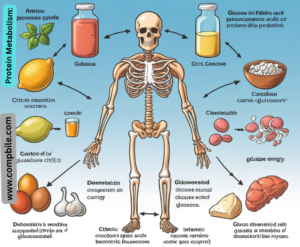
Protein Metabolism:
- Proteins are broken down into their individual amino acids. These amino acids can be used to build new proteins. If not needed, their amino group is removed (deamination) and the remaining carbon skeleton can be converted into glucose (gluconeogenesis) or fed into the Citric Acid Cycle for energy.
Metabolic Flexibility: The Key to Metabolic Health
- A healthy metabolism is a flexible one. This is the body’s ability to efficiently switch between burning different fuel sources (primarily carbs and fats) depending on their availability and the body’s demands.
- A Metabolically Flexible Person: After a meal, they easily burn carbohydrates for energy. Overnight, while fasting, they seamlessly switch to burning stored fat. They have good energy levels, stable mood, and find it easier to maintain a healthy weight.
- A Metabolically Inflexible Person: Is often “stuck” in carb-burning mode. They struggle to access fat stores, leading to constant hunger, energy crashes, cravings, and weight gain, especially around the abdomen. This inflexibility is a hallmark of metabolic syndrome and Type 2 Diabetes.
Advanced Concepts & Disorders
Metabolic Syndrome: A cluster of conditions that occur together, increasing your risk of heart disease, stroke, and type 2 diabetes. It is diagnosed by having 3 or more of:
- Abdominal obesity (large waist circumference)
- High blood pressure
- High blood sugar (insulin resistance)
- High triglyceride levels
Low “good” HDL cholesterol levels
- A classic example is Phenylketonuria (PKU), where the enzyme that breaks down the amino acid phenylalanine is missing, leading to a toxic buildup that causes intellectual disability if not managed with a strict diet.
- They help digest certain fibers, produce essential vitamins (like Vitamin K and some B vitamins), and influence everything from your appetite hormones to systemic inflammation.
Practical Takeaways for Optimizing Metabolism
- Focus on Building Muscle: This cannot be overstated. Muscle tissue is your most metabolically active “organ.” It bu
Practical Takeaways for Optimizing Metabolism
rns calories 24/7 and is a primary site for glucose disposal, which improves insulin sensitivity.
- Incorporate High-Intensity Interval Training (HIIT): While steady-state cardio burns calories during the activity, HIIT can create a significant “Afterburn Effect” (Excess Post-exercise Oxygen Consumption – EPOC), where your metabolism remains elevated for hours after the workout as it works to restore the body.
- Prioritize Sleep and Manage Stress: Chronic stress and poor sleep elevate cortisol, which can promote fat storage (especially visceral fat) and increase cravings for high-calorie foods.
- Consider Meal Timing (Intermittent Fasting): For some people, condensing their eating window (e.g., 16:8 fasting) can help improve metabolic flexibility by giving the body a longer period to deplete glycogen stores and switch to fat-burning. Note: This is not suitable for everyone.
- Eat a Whole-Foods, Fiber-Rich Diet: A diet rich in vegetables, fruits, lean proteins, and healthy fats supports stable blood sugar, a healthy gut microbiome, and provides the essential vitamins and minerals that act as coenzymes (helpers) for all metabolic reactions.