
Romantasy Of course! “Romantasy” is one of the biggest and most exciting trends in publishing right now.
What is Romantasy?
- Romantasy is a genre blend where Romance and Fantasy are co-equal pillars of the story. It’s not a fantasy story with a romantic subplot, nor is it a romance novel with a fantasy backdrop. In a true romantasy, both elements are essential to the core plot; if you remove one, the entire story collapses.
- The central, driving question of a romantasy is typically: “Will they save the world AND end up together?”
Key Characteristics of Romantasy
- The “Spine” is the Romance: The central, often epic, love story is the primary emotional driver for the reader. The “will they/won’t they” tension is paramount.
- High-Stakes Fantasy World: The setting is a fully realized fantasy world with its own magic systems, political conflicts, mythical creatures, and impending doom. The fantasy plot creates obstacles for the romantic couple.
- Powerful, Often Magical, Protagonists: It’s very common for one or both love interests to possess significant power—be it magical, political, or physical. Think fae kings, powerful sorceresses, vampire lords, or dragon riders.
- Popular Tropes: The genre thrives on specific, beloved tropes:
Enemies to Lovers
- Fated Mates / Soul Bonds
- Morally Grey Love Interest (the “villain you love”)
- Slow Burn Romance
- Academy Settings
- Love Triangles (or other polygons)
How to Distinguish It From Similar Genres
- vs. Fantasy with a Romance Subplot: In series like The Stormlight Archive or The Lord of the Rings, the romance is secondary to the main goal of saving the world. In Romantasy, the romance is a primary goal.
- vs. Paranormal Romance (PNR): PNR is a sub-genre of romance that uses supernatural elements (vampires, werewolves) but is often set in our contemporary world. Romantasy is almost exclusively set in a secondary, fictional world.
- vs. Fantasy Romance: This is the closest relative. Many use the terms interchangeably. Some argue “Fantasy Romance” is the broader category, with “Romantasy” being the current, trendy label for its most popular wave.
Must-Read Romantasy Books & Series
If you’re new to the genre, these are the essential starting points:
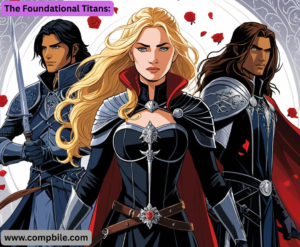
The Foundational Titans:
- A Court of Thorns and Roses (ACOTAR) by Sarah J. Maas: Arguably the series that exploded the genre into the mainstream. It has everything: fae, epic battles, steamy romance, and a legendary protagonist evolution.
- Fourth Wing by Rebecca Yarros: The recent blockbuster that took the torch. Dragons, a deadly war college, and irresistible tension. It defines the modern romantasy.
- From Blood and Ash by Jennifer L. Armentrout: A sprawling series with a unique vampire-adjacent mythology, a chosen one narrative, and a very slow-burn, forbidden romance.
Other Highly Popular Series:
- The Serpent and the Wings of Night by Carissa Broadbent: A human woman competing in a deadly tournament hosted by vampire gods. Gritty, romantic, and fast-paced.
- The Cruel Prince by Holly Black: A masterclass in enemies-to-lovers set in the dangerous world of the Faerie Court. More YA-leaning but with sharp political intrigue.
- The Bridge Kingdom by Danielle L. Jensen: Less magic, more political fantasy, but the romance is absolutely central and full of betrayal and tension.
- Throne of Glass by Sarah J. Maas: Maas’s first series. It starts more as a high fantasy assassin tale and evolves into an epic romantasy.
Why is Romantasy So Popular Now?
- Escapism: It offers a complete escape into a world of magic, power, and epic love.
- Female Gaze: The genre is largely written by and for women, centering female desire, agency, and power.
- Community: The popularity on platforms like BookTok (the book community on TikTok) has created a massive, passionate fanbase that loves to discuss theories, create fan art, and share their love for these stories.
- Wish Fulfillment: The idea of being powerful, important, and loved by a formidable, devoted partner is a powerful fantasy.
Subgenres & Flavors of Romantasy
Not all Romantasy is the same. The genre has several distinct flavors based on setting and tone:
- Fae Romantasy: The most dominant subgenre. Centered on the beautiful, powerful, manipulative, and often cruel Fae courts (Seelie, Unseelie, Spring, Night, etc.).
- Examples: A Court of Thorns and Roses, The Cruel Prince, The Plated Prisoner series.
- Romantasy with Dragons & Riders: Focuses on the bond between riders and their dragons, often set in a military or academy setting.
- Examples: Fourth Wing (the Empyrean series), The Aurelian Cycle (by Rosaria Munda).
- Urban Romantasy / Paranormal Romance: While often grouped under PNR, some are so epic in world-building they cross into Romantasy. Set in a version of our world with a hidden magical society.
- Examples: Crescent City (by Sarah J. Maas), Kate Daniels series (by Ilona Andrews).
- Dark Romantasy: Heavily features dark, violent, and morally complex themes. The love interest is often a true villain or anti-hero, and the romance is intense, obsessive, and potentially toxic.
- Examples: Zodiac Academy (bully romance), The Bonds That Tie series (by J. Bree), A King of Battle and Blood (by Scarlett St. Clair).
- Romantasy Academia: The central setting is a school or university for the magically or martially gifted, where the romance and fantasy plots unfold.
- Examples: Zodiac Academy, Fourth Wing, A Deadly Education (though this leans more fantasy with a strong romantic subplot).

Deep Dive into Key Tropes & Why They Work
- “Who Did This To You?”: The moment the powerful love interest discovers the protagonist has been hurt and unleashes their fury to protect/avenge them. It’s the ultimate fantasy of being fiercely protected and valued.
- “Touch Her and You Die”: The possessive, protective declaration that establishes the love interest’s power and devotion. It’s a power fantasy for the reader.
- The Mating Bond: A biological or magical “fated mates” bond that creates an intense, often uncontrollable, attraction. This trope creates instant tension and forces proximity, allowing the emotional relationship to develop alongside the physical one.
- “He Fell First (And Harder)”: A hugely popular dynamic where the seemingly cold and powerful male love interest is secretly already obsessed and in love, while the female protagonist is oblivious or resistant. It flips traditional gender roles in romance.
- Found Family: The protagonist, often an outcast, finds a loyal group of friends and allies who stand by them through everything. This provides emotional support outside the central romance and deepens the world-building.
- The Powerful Heroine’s Journey: The protagonist often starts seemingly ordinary or powerless but discovers immense, world-altering power within herself. Her journey of self-discovery is as important as the romantic journey.
The Anatomy of a Romantasy Love Interest
The male lead is a cornerstone of the genre. Common archetypes include:
- The Brooding King of Shadows: Morally grey, powerful, haunted by a past, and rules a court of darkness or night. (e.g., Rhysand from ACOTAR, Rowan from Throne of Glass).
- The Wounded Warrior: A fierce fighter, emotionally scarred and resistant to love, but fiercely loyal. (e.g., Xaden Riorson from Fourth Wing).
- The Cunning Trickster: Charismatic, witty, and unpredictable. He uses his intellect and charm as weapons. (e.g., Cardan from The Cruel Prince).
- The Obsessive Alpha: Possessive, dominant, and utterly focused on the heroine, often blurring the lines between love and obsession. (Common in darker romantasy).