
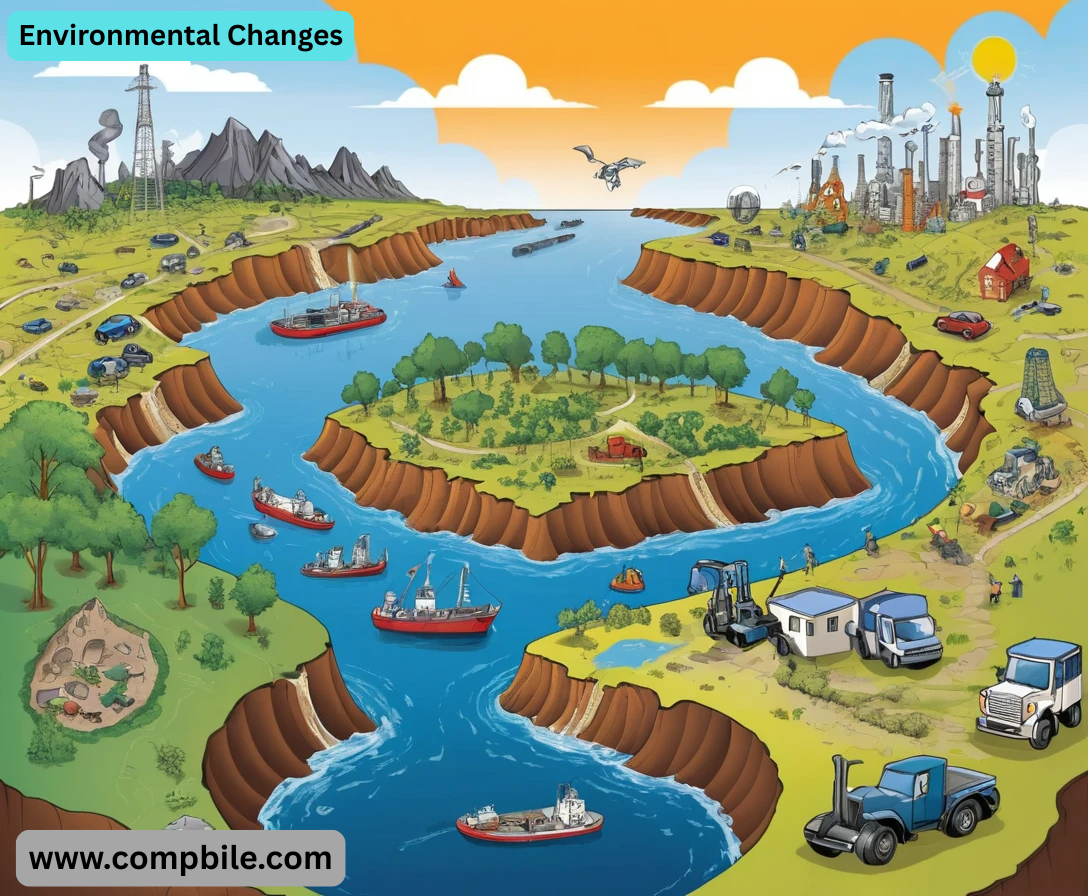
Environmental Changes Of course. The topic of “Environmental Changes” is vast and critical. This response will break it down into key areas: the primary drivers (causes), the major observed and projected changes (effects), and the overarching solutions and responses.
Introduction: What Do We Mean by “Environmental Changes”?
- Environmental changes refer to the significant and often rapid alterations to Earth’s physical, chemical, and biological systems. While the environment has always changed naturally over geological time, the current era is defined by changes that are unprecedented in their rate and scale, primarily driven by human activities since the Industrial Revolution. This period is sometimes called the Anthropocene.
Primary Drivers (The Causes)
These are the human activities putting pressure on the environment:
- Greenhouse Gas Emissions: The burning of fossil fuels (coal, oil, gas) for energy, transportation, and industry releases carbon dioxide (CO₂) and other gases.Deforestation also releases stored CO₂.
- Deforestation and Land Use Change: Clearing forests for agriculture, urban expansion, and logging destroys critical carbon sinks and habitats, leading to biodiversity loss and soil degradation.
- Agriculture and Industrialization: Intensive farming practices use large amounts of water, fertilizers (leading to pollution), and pesticides. Industrial processes release pollutants into the air, water, and soil.
- Pollution: This includes plastic pollution in oceans, chemical runoff into waterways, air pollution from particulates, and the accumulation of toxic waste.
- Resource Depletion: Overconsumption of freshwater, overfishing, and mining of minerals at unsustainable rates.
Key Observed and Projected Changes (The Effects)
Climate Change
- The most overarching change, driven by a warming planet.
- Rising Global Temperatures: The past decade has been the warmest on record.
- Melting Ice and Rising Sea Levels: Polar ice caps and glaciers are melting, and ocean water is expanding as it warms, threatening coastal cities and island nations.
- Ocean Acidification: The oceans absorb about 30% of emitted CO₂, making them more acidic. This harms marine life, especially organisms with calcium carbonate shells and skeletons, like corals and shellfish.
- Increase in Extreme Weather Events: More frequent, intense, and prolonged heatwaves, droughts, wildfires, heavy rainfall, floods, and powerful hurricanes.
Biodiversity Loss (The 6th Mass Extinction)
- Habitat Destruction: The primary cause of species loss. Forests, wetlands, and grasslands are being fragmented and destroyed.
- Species Extinction: Rates of extinction are estimated to be 100 to 1,000 times higher than natural background rates. This loss of genetic diversity weakens ecosystems’ resilience.
- Ecosystem Collapse: Coral reefs are bleaching, rainforests are drying, and key ecosystems are reaching tipping points where they can no longer function normally.
Pollution and Environmental Degradation
- Air Pollution: Smog and particulate matter (PM2.5) cause millions of premature deaths annually and contribute to respiratory illnesses.
- Water Pollution & Scarcity: Industrial waste, agricultural runoff, and plastic waste contaminate freshwater sources and oceans. Combined with overuse, this creates severe water scarcity in many regions.
- Soil Degradation: Deforestation, overgrazing, and poor agricultural practices lead to soil erosion, desertification, and loss of fertile land.
Changes in Biochemical Cycles
- Human activity has drastically altered the natural flows of key elements like nitrogen and phosphorus (primarily through fertilizers), leading to problems like algal blooms in water bodies that create “dead zones” devoid of oxygen.
Impacts on Human Society
Environmental changes are not just a “nature” problem; they directly impact human health, security, and economies:
- Food and Water Security: Droughts and unpredictable weather disrupt agriculture and access to clean water.
- Human Health: Heat stress, spread of infectious diseases (e.g., malaria moving to new areas), respiratory problems from pollution, and malnutrition.
- Displacement and Climate Migration: Rising seas and failing farms force people to leave their homes, creating refugees.
- Economic Costs: Billions of dollars in damages from extreme weather events, lost productivity, and increased healthcare costs.
- Social and Political Instability: Resource scarcity can exacerbate conflicts and geopolitical tensions.
Solutions and Responses
Addressing these changes requires a multi-faceted approach:
- Mitigation: Efforts to reduce the cause of the problem.
- Transition to Renewable Energy: Solar, wind, hydro, and geothermal to replace fossil fuels.
- Energy Efficiency: Using less energy in buildings, transportation, and industry.
- Sustainable Agriculture & Forestry: Practices that protect soil, water, and biodiversity.
- Carbon Capture: Technologies and natural solutions (like reforestation) to remove CO₂ from the atmosphere.
- Circular Economy: Reducing waste by reusing, recycling, and repairing products.
- Adaptation: Adjusting to the changes that are already inevitable.
- Building Resilient Infrastructure: Sea walls, climate-proof buildings, and improved water storage.
- Developing Drought-Resistant Crops: Adapting agriculture to new climate realities.
- Protecting and Restoring Ecosystems: Mangroves and wetlands protect coastlines from storms; healthy forests regulate water cycles.
- Early Warning Systems: For extreme weather events.
Policy and International Cooperation:
- International Agreements: Frameworks like the Paris Agreement aim to unite countries in limiting global warming.
- National and Local Laws: Regulations on emissions, pollution, and protection of natural areas.
- Economic Instruments: Carbon pricing (taxes or cap-and-trade systems) to make polluters pay.
The Concept of “Tipping Points” and Irreversible Change
- Environmental Changes This is one of the most critical and concerning concepts in climate science. Tipping points are thresholds within the Earth’s system that, once crossed, can lead to large, rapid, and often irreversible changes.
Examples of Potential Tipping Elements:
- Collapse of the Greenland and West Antarctic Ice Sheets: Once a certain level of melting occurs, it could become self-sustaining due to mechanisms like surface height melting (lower altitude = warmer air), leading to many meters of sea-level rise committed for centuries.
- Dieback of the Amazon Rainforest: Deforestation and warming could push the Amazon to a point where it can no longer generate its own rainfall, transitioning from a lush rainforest to a dry savanna ecosystem, releasing vast amounts of stored carbon.
- Shutdown of Atlantic Ocean Circulation (AMOC): The system of currents that redistributes heat (like the Gulf Stream) is slowing. A full collapse would drastically alter weather patterns, cooling Europe and disrupting monsoons critical for agriculture in Africa and Asia.
- Thawing of Permafrost: Arctic permafrost holds vast amounts of organic carbon. As it thaws, it releases methane (a potent GHG) and CO₂, creating a vicious feedback loop that accelerates warming.
The Inequality of Impact and Responsibility
Environmental change is profoundly unjust. The burdens are not shared equally.
- Historical Responsibility: The vast majority of historical greenhouse gas emissions came from today’s developed, industrialized nations.
- Uneven Vulnerability: Developing nations and low-lying island states, which have contributed the least to the problem, are often the most vulnerable to its effects (e.g., sea-level rise, desertification, extreme weather) due to geographic location and limited financial resources to adapt.
- Social Justice: Within all countries, the poor, elderly, indigenous communities, and other marginalized groups are disproportionately affected. They often live in more vulnerable areas (e.g., floodplains, urban heat islands) and have fewer resources to recover from disasters or relocate.
- This raises complex questions of climate justice and the obligation of wealthy nations to provide financial and technological support to developing nations for mitigation and adaptation (Loss and Damage is a key term in international negotiations).
Beyond Climate: The “Planetary Boundaries” Framework
- This model, developed by the Stockholm Resilience Centre, argues that climate change is just one of several Earth system processes we must not destabilize. It defines a “safe operating space for humanity.”
The nine planetary boundaries include:
Climate Change
- Biosphere Integrity (biodiversity loss and extinctions)
- Land-System Change (deforestation)
- Freshwater Change (both blue water [rivers/lakes] and green water [soil moisture])
- Biogeochemical Flows (Nitrogen and Phosphorus cycles – heavily disrupted by fertilizer use)
Ocean Acidification
- Atmospheric Aerosol Loading (particulate pollution that affects climate and health)
- Stratospheric Ozone Depletion (the one boundary we are successfully healing thanks to the Montreal Protocol)
- Novel Entities (pollution from human-made chemicals and materials like plastics, pesticides, and nuclear waste)
- We have already transgressed the safe boundary levels for several of these, including climate change, biosphere integrity, and nitrogen/phosphorus cycles.
The Mental Health Toll: Eco-Anxiety and Solastalgia
The psychological impact of environmental change is becoming a major public health concern.
- Eco-Anxiety: A chronic fear of environmental doom. It’s particularly prevalent among young people who feel their future is threatened.
- Solastalgia: A term describing the distress caused by the transformation and degradation of one’s home environment. It’s a form of homesickness while you are still at home. People watching their familiar landscapes change through drought, fire, or development experience this deeply.
- Trauma from Disasters: The direct psychological trauma of surviving wildfires, floods, hurricanes, and displacement.
Geopolitical and Security Implications (Climate Conflict)
Environmental change is a “threat multiplier.” It exacerbates existing tensions and can create new drivers of conflict:
- Resource Scarcity: Competition over dwindling resources like water and arable land can fuel regional tensions and violence.
- Displacement: Climate migration, both within and across borders, can strain infrastructure and resources in receiving areas, potentially leading to social unrest.
- Strategic Competition: Melting Arctic sea ice is opening new shipping lanes (the “Northern Sea Route”) and access to untapped resources, leading to increased military presence and geopolitical maneuvering among Arctic nations.
The Role of Technology: Hope and Hubris
Technology presents double-edged swords.
- Promising Solutions: Advancements in renewable energy storage (batteries), green hydrogen, carbon capture and utilization, and smart grids are essential for decarbonization.
- Nature-Based Solutions: Using ecosystems themselves as infrastructure (e.g., restoring mangroves for flood defense, reforestation for carbon sequestration).
- The Risks of Geoengineering: Proposed large-scale technological interventions like Solar Radiation Management (e.g., injecting aerosols into the stratosphere to reflect sunlight) are highly controversial. They pose massive unknown risks, governance challenges, and could have wildly different regional impacts, potentially creating new sources of international conflict. They do not address the root cause (ocean acidification from CO₂ continues).