
Maximalist Art Maximalist Art is a bold and intentional aesthetic philosophy that embraces excess, complexity, and sensory overload. It is the visual and philosophical opposite of Minimalism. Where Minimalism whispers “less is more,” Maximalism shouts “more is more!”
It is not merely clutter or hoarding; it is a curated chaos. Every element, pattern, and color is deliberately chosen to create a rich, layered, and highly personal composition that celebrates abundance, narrative, and eclecticism.
Core Principles and Characteristics
Maximalist Art is defined by a few key principles:
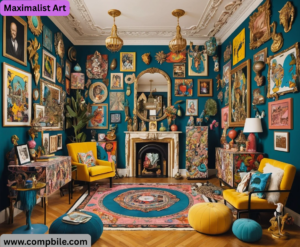
- Layering and Saturation: The visual field is completely filled. There is little to no negative (empty) space. Layers of pattern, texture, and imagery are stacked upon one another.
- Bold Color Palettes: It often employs vibrant, high-contrast, and sometimes clashing color schemes. Jewel tones, neons, and rich primaries are common.
- Eclectic Mix of Patterns: This is a hallmark. Stripes, florals, animal prints, geometrics, and paisleys are all combined without fear.
- Ornate Detailing and Texture: Surfaces are rich with detail. Think intricate filigree, heavy textiles, gloss, matte, rough, and smooth textures all in one place.
- Personal Narrative and Collections: Maximalist works often tell a story or reflect the artist’s (or collector’s) passions, travels, and interests. It frequently features collections of objects, memorabilia, and “things.”
- A Sense of Theatricality and Drama: The overall effect is often dramatic, opulent, and unapologetically decadent, drawing inspiration from historical movements like Baroque and Rococo.
Historical Context and Inspirations
- While the term “Maximalism” gained popularity in the late 20th century as a direct reaction to the starkness of Minimalism, its spirit has existed for centuries.
- Baroque (17th century): Characterized by grandeur, sensuous richness, drama, and movement. Think of the swirling, emotionally charged paintings of Caravaggio or Peter Paul Rubens, where every inch of the canvas is filled with action, shadow, and detail.
- Rococo (18th century): Even more ornate and playful than Baroque, featuring asymmetrical designs, pastel colors, and copious curving forms and gilding. The works of Jean-Honoré Fragonard (e.g., The Swing) are perfect examples.
- Victorian Era (19th century): Known for its “horror vacui” (fear of empty spaces), Victorian interiors and design were densely packed with furniture, patterns, collections, and tchotchkes.
- Art Nouveau & Art Deco: While more structured, these styles contributed to Maximalism through their intricate patterns, luxurious materials, and decorative emphasis.
- Pop Art (1950s-60s): Artists like Andy Warhol and James Rosenquist embraced consumer culture and media saturation, creating art that was bold, repetitive, and visually dense.
Maximalism in Contemporary Art
Today, many artists wholeheartedly embrace the Maximalist ethos:
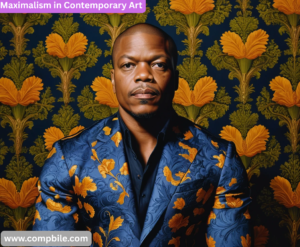
- Kehinde Wiley: Known for his large-scale, highly detailed portraits of contemporary Black subjects placed within ornate, decorative backgrounds inspired by historical patterns and Old Master paintings. His work is a masterclass in modern Maximalism.
- Yayoi Kusama: Her “Infinity Mirror Rooms” and obsessively patterned paintings and sculptures create an all-encompassing, immersive experience that is the epitome of sensory abundance.
- Takashi Murakami: His “Superflat” style combines Japanese anime and traditional art with a hyper-saturated, densely packed visual field.
- Mickalene Thomas: Creates dazzling, rhinestone-encrusted paintings and installations that explore ideas of Black femininity and beauty, using patterns upon patterns and a lush, maximalist approach.
- The Chapman Brothers (Jake and Dinos): Their intricate and often shocking dioramas and sculptures are densely populated with figures and details, creating a chaotic, narrative-rich tableau.
Maximalism in Interior Design
- This is where most people encounter Maximalism today. Key elements include:
- Gallery Walls: A collection of art, photographs, and objects covering a wall from floor to ceiling.
- Pattern Clashing: Mixing wallpapers, upholstery, and rugs in bold, contrasting patterns.
- Layering Textiles: Throws, pillows, and rugs in various textures and patterns.
- Color-Drenched Rooms: Using bold, dark, or vibrant colors on walls, ceilings, and trim.
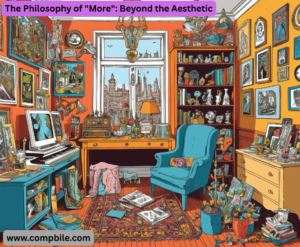
- Collections on Display: Books, ceramics, vintage finds, and travel souvenirs are proudly showcased.
How to Embrace Maximalist Art (A Quick Guide)
If you’re drawn to this style, remember it’s about curated chaos.
- Start with a Foundation: Choose a dominant color or a “hero” piece (a large painting or a bold wallpaper) to build upon.
- Mix, Don’t Match: Collect pieces you genuinely love, regardless of their “style.” The connection is your personal taste.
- Embrace Pattern: Start by mixing two patterns with a common color thread, then add more.
- Think in Layers: Add texture with rugs, tapestries, and different fabric types.
- Tell Your Story: Fill your space with objects that have meaning to you. Maximalism is deeply personal.
The Philosophy of “More”: Beyond the Aesthetic
- Maximalism isn‘t just a style; it’s a mindset. It’s a rejection of the notion that value lies in emptiness and a celebration of the stories that objects and images can tell.
- Abundance as Comfort: For many, a space filled with books, art, and collections isn’t overwhelming; it’s a “nest” or a “cocoon.” It provides intellectual and emotional stimulation and a sense of being surrounded by one’s own history.
- The Anti-Algorithm: In a world of sleek, minimalist tech and streamlined interfaces, Maximalism is a human-centric rebellion. It insists on texture, imperfection, and the uniqueness that algorithms often smooth away.
- Confidence and Self-Expression: It takes confidence to declare, “This is who I am, and these are the things I love.” It refuses to apologize for its presence.
Techniques for Creating Maximalist Art
How do artists and designers achieve this curated chaos without it tipping into mere mess?
- The Grid as an Organizing Principle: Even within the chaos, a hidden structure often exists. Think of a gallery wall—the individual pieces are eclectic, but they are often aligned to an invisible grid, creating a cohesive whole from the diversity.
- Color as the Unifying Thread: A maximalist composition might mix a dozen patterns, but they can all be tied together by a consistent color palette (e.g., all pink and green, or all jewel tones).
- Varied Scale: Combining patterns and objects of vastly different scales (a large floral print with a tiny geometric stripe) prevents the eye from getting stuck and creates dynamic visual interest.
- Texture, Texture, Texture: This is the secret weapon. A room or artwork can be monochromatic but still intensely maximalist through the use of velvet, silk, rough wood, glossy ceramic, matte metal, and woven baskets. The tactile experience is as rich as the visual one.
Sub-Genres and Inspirations of Maximalism
Maximalism manifests in different ways:
- Grandmillennial (Granny Chic): A modern take on traditional, classic styles. Think chintz, ruffles, needlepoint, wicker, and heirlooms, but mixed with contemporary art and self-awareness.
- Academic Maximalism: The “dark academia” or “library core” aesthetic. Walls lined with books, classical busts, leather chairs, and globes. The “more” here is about knowledge and intellectual pursuit.
- Global Fusion: A style that reflects a well-traveled life. It mixes textiles, artifacts, and art from various cultures around the world, creating a personal museum of one’s journeys.
- Biophilic Maximalism: Filling a space with an abundance of plants of all shapes and sizes, alongside natural materials like wood and stone. The “more” is about connecting to the lushness of the natural world.