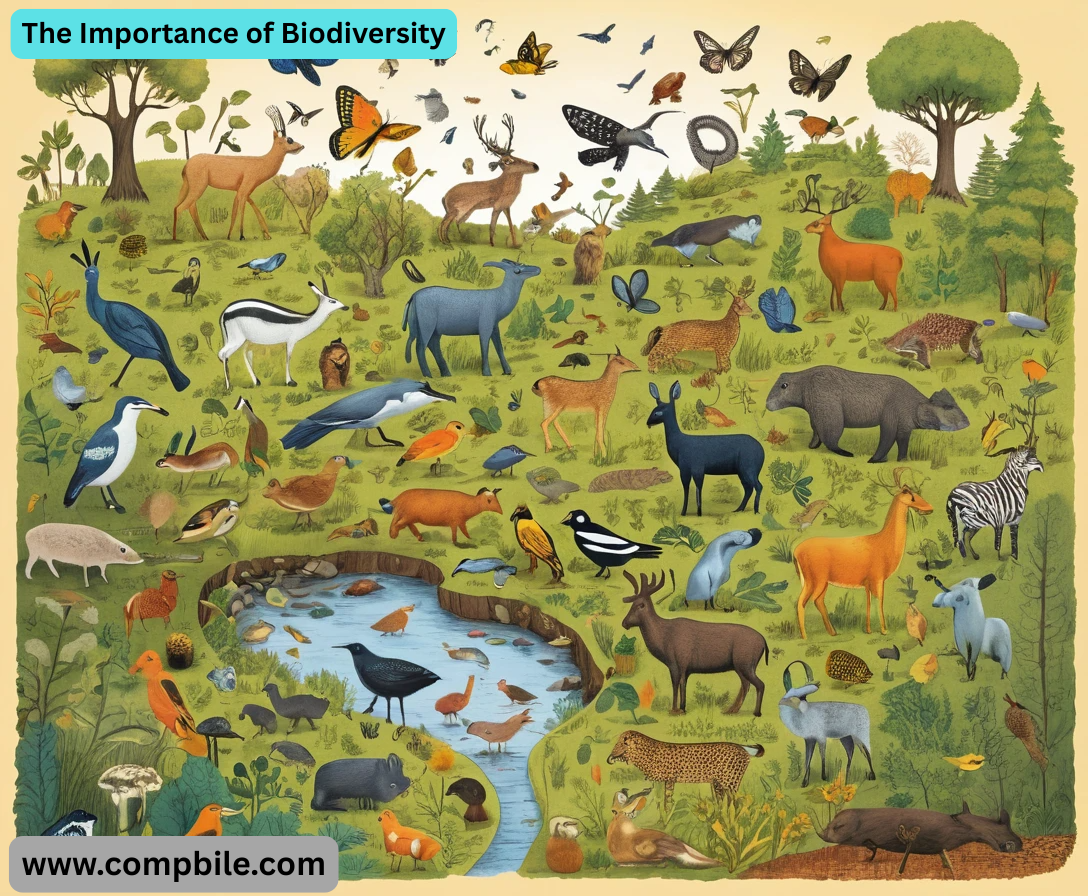
The Importance of Biodiversity The Importance of BiodiversityBiodiversity (a contraction of “biological diversity”) refers to the vast variety of life on Earth, encompassing the entire spectrum of living things: from genes and species to ecosystems and landscapes. It is not merely a count of species but the intricate web of relationships that sustains life. Its importance is multifaceted and fundamental to our survival and well-being.

Ecosystem Services: The Life-Support Systems
- The Importance of Biodiversity Biodiversity is the engine that powers the natural systems we depend on for free. These are often called “ecosystem services.”
- Provisioning Services: Goods We Consume
- Food: All our food originates from biodiversity—crops, livestock, fish, and wild foods.
- Fresh Water: Forests and wetlands filter and purify water, regulating its flow and preventing droughts and floods.
- Raw Materials: Wood, fibers (cotton, wool), biofuels, and medicinal compounds all come from nature. Over 50% of all modern medicines are derived from natural compounds found in plants, animals, and microbes.
Regulating Services: Nature’s Balance
- Climate Regulation: Forests and oceans act as massive carbon sinks, absorbing carbon dioxide and helping to regulate the global climate.
- Pollination: Over 75% of the world’s food crops, including fruits, vegetables, and coffee, rely on animal pollinators like bees, birds, and bats.
- Pest and Disease Control: Diverse ecosystems host natural predators that control pests, reducing the need for chemical pesticides.
- Water and Air Purification: Wetlands filter pollutants from water, and plants absorb harmful chemicals from the air and soil.
Supporting Services: The Foundations of Life
- The Importance of Biodiversity Soil Formation and Nutrient Cycling: Decomposers like fungi and bacteria break down waste and dead matter, returning essential nutrients to the soil, which is crucial for plant growth.
- Photosynthesis: The process by which plants convert sunlight into energy, forming the base of most food webs and producing the oxygen we breathe.
Economic Value: The Backbone of Economies
Biodiversity is a critical economic asset.
- Agriculture, Fisheries, and Forestry: These industries, worth trillions of dollars globally, are entirely dependent on healthy, diverse genetic pools and ecosystems.
- Tourism and Recreation: Iconic landscapes, wildlife safaris, coral reefs, and national parks generate enormous revenue and support millions of jobs through ecotourism.
- Biotechnology and Medicine: Genetic diversity is a treasure trove for scientific discovery. It provides the raw genetic material for developing new medicines, improving crop resilience, and creating innovative industrial materials.

Ethical, Cultural, and Aesthetic Value
The value of biodiversity extends beyond dollars and cents.
- Intrinsic Value: Many people believe that every species has an inherent right to exist, regardless of its usefulness to humans.
- Cultural Identity: Biodiversity is deeply woven into the cultural fabric of societies. Many indigenous communities have spiritual, religious, and historical connections to specific species and landscapes.
- Aesthetic and Recreational Value: The natural world is a source of inspiration, beauty, mental well-being, and recreation for people around the globe. From hiking and birdwatching to art and literature, nature enriches our lives.
Adaptive Capacity and Resilience
This is perhaps one of the most critical roles of biodiversity.
- Insurance Against Change: Diverse ecosystems are more stable and resilient to disturbances like fires, floods, and droughts. If one species is wiped out by a disease, a diverse system has others that can fill its ecological role, preventing the entire system from collapsing.
- The Importance of Biodiversity Evolutionary Potential: Genetic diversity within species allows them to adapt to changing environmental conditions, such as new diseases or a shifting climate. This is crucial for food security, as we need crop varieties that can withstand new pests and warmer temperatures.
The Threat: Biodiversity Loss
- Human activities—deforestation, overfishing, pollution, climate change, and the introduction of invasive species—are causing a catastrophic loss of biodiversity at an unprecedented rate. This is often called the “Sixth Mass Extinction.”
The Genetic Library: A Treasure Trove of Solutions
- Every species is a repository of genetic information, a unique set of codes shaped by millions of years of evolution. This “library” holds solutions to problems we are only beginning to face.
- Biomimicry: Engineers and designers study nature’s models to solve human problems. The shape of a kingfisher’s beak inspired the design of Japan’s quieter bullet trains. The structure of whale fins led to more efficient wind turbine blades.
- Future-Proofing Medicine: Less than 1% of rainforest plant species have been studied for their medicinal potential. The next cure for cancer, Alzheimer’s, or a future pandemic could reside in a plant, fungus, or deep-sea microbe that hasn’t yet been discovered. Losing a species is like burning a unique medical textbook we never got to read.
- Crop Resilience: Wild relatives of domestic crops contain genetic traits (like drought tolerance, pest resistance, or nutritional value) that are crucial for breeding new varieties to withstand climate change and feed a growing population. The genetic uniformity of modern agriculture makes our food supply dangerously vulnerable.
The “Why” Behind Ecosystem Stability: The Insurance Hypothesis
The relationship between diversity and stability is a core ecological principle.
- Functional Redundancy: In a diverse ecosystem, multiple species often perform similar roles (e.g., many different insects pollinate flowers or decompose matter). If one species disappears, another can step in and fulfill its function, preventing the entire system from breaking down. A monoculture has no backup.
- The Portfolio Effect: This economic concept applies perfectly to ecology. A financial portfolio diverse in stocks and bonds is less vulnerable to a market crash. Similarly, an ecosystem with many species is buffered against environmental shocks. Some species will thrive under new conditions, ensuring the ecosystem’s overall function continues.
The Unseen Majority: Microbial Biodiversity
- We often think of plants and animals, but the true rulers of biodiversity are microbes (bacteria, archaea, viruses, fungi). Their diversity is staggering and essential.
- Human Microbiome: The complex community of microbes in our gut is directly linked to our digestion, immune system, mental health, and overall well-being. Loss of microbial diversity in our bodies is linked to a rise in autoimmune diseases and allergies.
- The Importance of Biodiversity Planetary Health: Microbes in the soil are responsible for the nitrogen and carbon cycles that make life possible. They break down pollutants and are the primary decomposers on Earth. The health of the soil, and thus our ability to grow food, is entirely dependent on this invisible biodiversity.

Biodiversity and Climate Change: A Two-Way Relationship
This is a critical feedback loop.
- Biodiversity as a Climate Solution: Healthy, diverse ecosystems are powerful carbon sinks. Complex old-growth forests, peatlands, and seagrass meadows store far more carbon than monoculture plantations or degraded land. Protecting and restoring biodiversity is a key strategy for climate mitigation.
- Climate Change as a Threat: Rising temperatures, ocean acidification, and changing weather patterns are major drivers of biodiversity loss (e.g., coral bleaching, shifting habitats). This creates a vicious cycle: climate change damages ecosystems, which reduces their ability to sequester carbon, which worsens climate change.
The Social and Justice Dimension
Biodiversity loss does not affect everyone equally.
- Indigenous Stewardship: Though comprising only about 6% of the global population, Indigenous Peoples manage or have tenure over lands that hold an estimated 80% of the world’s remaining biodiversity. Their knowledge systems and sustainable practices are irreplaceable assets for conservation.
- Disproportionate Impact: The poorest communities, often most directly dependent on natural resources for their daily survival (fishing, gathering firewood, subsistence farming), are the first and hardest hit by ecosystem degradation. Biodiversity loss is a major issue of environmental justice.
A New Way to Frame It: The “Natural Capital” vs. “Ecosystem Services” Debate
Some economists and scientists argue that putting a dollar value on nature (calling pollination a “service”), while useful for policy, fundamentally undervalues it. They propose a more robust framework:
- Natural Capital: The stock of the world’s natural assets ( geology, soil, air, water, and all living things).
- Natural Dividend: The immense flow of benefits that this capital provides humanity for free.
- From this view, biodiversity is not just a provider of services; it is the underlying infrastructure that generates all economic activity. You cannot have a functioning economy on a failed ecological system.